Selling Your Home in a New Hampshire Winter
Thinking about selling in the cold months and wondering if buyers will show up? You are not alone. Winter in New Hampshire can feel like the slow season, but in the Upper Valley many buyers stay active and motivated. In this guide, you will learn how to price for today’s demand, prep for safe and inviting showings, plan great photos in the snow, and decide whether to list now or wait for spring. Let’s dive in.
Spring brings the most listings, but winter can open real opportunities. Inventory often dips, which means less competition for your home. The buyers who keep shopping in winter are usually serious about moving, whether due to job relocations, family timing, or low inventory.
In the Upper Valley, local factors help keep demand steady. Moves tied to Dartmouth College and major healthcare employers can happen any month. Some villages and neighborhoods with limited for-sale supply can favor sellers even in winter. Your price range and property type also matter. Single-family homes with winter-friendly features like a mudroom, efficient heating, and a heated garage often perform well.
To understand your position, look at the most recent data. Review sold comps from the last 30 to 90 days in your town and micro-climate. Compare current active inventory to recent months to see if competition is tight. Track days on market trends for your neighborhood in winter versus other seasons. This local picture will guide an effective strategy.
Price for recent local comps and current demand, not an idealized spring number. Winter buyers are focused and ready to transact when the price matches value. Your goal is to draw strong early attention, create momentum, and move quickly on qualified offers.
Build a comparative market analysis that includes the last 30 to 90 days, plus a 6 to 12 month look-back to capture seasonality. Adjust for condition and winter-ready features such as insulation, heating system performance, and mudroom utility. These details can matter as much as square footage.
Set a clear pricing strategy that fits your submarket:
Be ready to act quickly on interest. Winter buyers often need clear timelines and faster possession, especially if moves are linked to academic or job cycles. If an appraisal is likely, make sure your agent can reference contemporary comps and include winter sales where available.
Watch showing activity closely in the first 2 to 4 weeks. If traffic is low after a reasonable marketing window, consider a price adjustment or refreshed media such as improved photos or a 3D tour. Keep an eye on feedback. Some concerns, like access safety, lighting, or heating, can be fixed without a price change.
Safety, comfort, and mechanical confidence are top priorities in winter. A well-prepared home removes easy objections and builds trust with buyers.
Start with essential maintenance and safety checks:
Address winter-specific repairs before listing. Disclose and, if possible, fix any known leak or ice dam history. Repair or replace exterior lighting and pathway fixtures so guests can navigate safely. Make sure steps and walkways are stable and not prone to icing.
Aim for a comfortable temperature during showings. Around 68 to 72 degrees usually feels good without overheating. Declutter and keep holiday decorations simple and neutral. Bright textiles, throws, and rugs can warm up a room while keeping the look streamlined.
Showcase features that make winter living easy. Organize the mudroom, highlight heated floors or a heated garage, and point out smart storage, laundry placement, and pantry space. At the entry, set up a tidy boot tray, a small broom or brush, and disposable boot covers. Increase ambient and task lighting to balance shorter daylight hours and choose warm bulbs where it makes sense.
Buyers appreciate clarity on operating costs and maintenance. Prepare a simple packet with:
Snow can be a selling asset if you prepare wisely. Clear and de-ice the main walk, driveway, steps, and at least one parking spot before every showing and photo session. Remove or mitigate icicles and any overhanging snow that could be a hazard. Make sure house numbers are visible and add temporary lighting so your address stands out. If snowbanks hide your sign, raise it or add reflective flags while following local rules.
Tidy the visible landscape by trimming shrubs and removing porch clutter. A few winter planters with evergreen branches or seasonal color can lift the entry. Manage the roofline and address any ice dams with repairs and disclosure if needed.
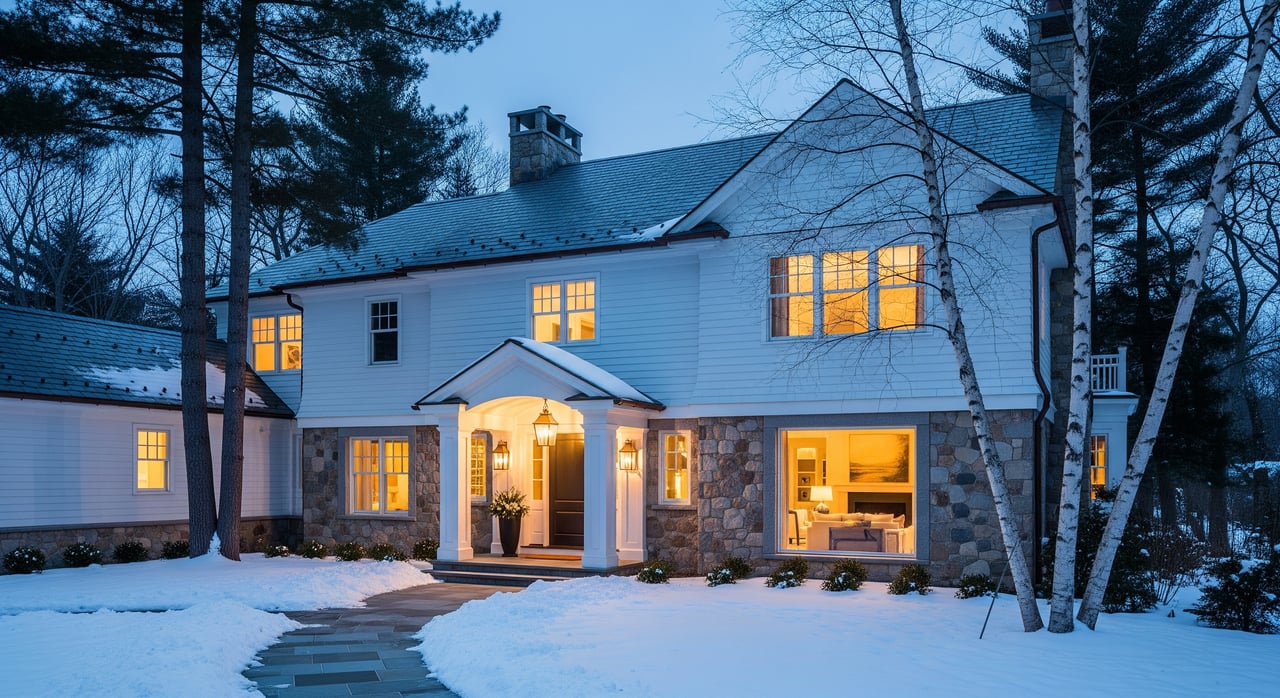
Plan photography on a clear day right after snow removal. Bright, fresh snow looks inviting in photos. Midday daylight reduces long shadows, and twilight shots can showcase exterior lighting and a warm interior glow. If snow will cover landscaping for weeks, plan to add spring photos later or consider tasteful virtual staging if allowed. Use 3D tours and floorplans to help buyers explore when weather limits travel, and offer live video tours for out-of-town buyers.
Create a consistent, safe showing routine. Shovel and treat paths, set out a boot area, and give clear parking instructions. Keep the home warm and well lit. Secure or remove pets and maintain a clean entry to avoid slippery rugs and slush.
Place the lockbox where it will not be buried by snow and include precise access notes for agents. Have a flexible plan for storm rescheduling and provide pre-cleared alternate showing times. Virtual options help you maintain momentum during bad weather.
For paperwork, follow New Hampshire disclosure requirements and include any known winter-related defects, such as prior roof leaks or drainage issues. Provide maintenance records to support a smooth inspection and appraisal. Consider flexible possession dates to reduce moving stress during winter conditions.
Many sellers list mid to late week so the home is fresh going into the weekend. Confirm the best timing with local MLS traffic patterns. If the weather is gray or slushy, wait for a clear photo window rather than pushing out a full launch with lackluster images. Supplement with twilight or interior photos if needed, then add exterior shots after the next clear day. Virtual open houses, 3D tours, and live video can capture remote buyers and limit cancellations due to storms.
Your decision should reflect your goals, the property’s strengths, and very recent local data. Here is a quick way to weigh the choice.
Reasons to sell now:
Reasons to wait for spring:
Practical next step: get a local CMA and consultation now. If you choose to wait, use winter to finish maintenance, gather documents, and line up photography and marketing so you can launch early and strong in spring.
Pre-list winter readiness (2 to 4 weeks out):
Day-of-showing checklist:
If you want a clear, data-backed plan for selling in winter, start with a local CMA and a simple prep timeline. With focused pricing, safe access, and strong winter media, you can attract serious buyers and move on your timeline. For tailored guidance across Hanover, Lebanon, Enfield, Sunapee, White River Junction, and nearby towns, connect with Jaime Durell. Request a Free Home Valuation and get a detailed winter strategy, from photography to negotiations. If you need speed or certainty, ask about flexible options that fit your goals.
Stay up to date on the latest real estate trends.